
Overview of This Round of Funding
Recently, Shenzhen Modulus Technology Co., Ltd. (hereinafter referred to as “Modulus Technology”) announced the completion of a 10 million yuan Pre-A round of financing led by Falcon Investment and Yihua Capital. The funds raised in this round will be used to expand the R&D team and production lines, as well as to expand global operations. Notably, in less than a year, Modulus Technology has completed three rounds of financing totaling tens of millions of yuan and is currently in a phase of rapid growth.
Modulus Technology: Three Core Segments, Building Full-Stack Tactile Perception Capabilities
Modulus Technology is one of the very few companies in China to have integrated the entire value chain—from “visual and tactile sensors” to “data acquisition” and “tactile models.” Through the synergistic efforts of its three core business segments, the company has established a complete closed-loop system spanning hardware to algorithms and physical signals to intelligent decision-making.
I. Visual-Tactile Sensors: Enabling Machines to “See” and Understand Touch
We have pioneered our proprietary “Image-to-Touch” technology, which uses high-precision image algorithms to inversely reconstruct high-density 3D contact force, texture, slippage, and contact surface information, thereby achieving a deep integration of vision and touch. Our technology ranks among the world’s best in terms of perception accuracy, resolution, response speed, and durability. Unlike the single-product offerings common in the industry, Modulus has launched a sensor matrix covering diverse forms—such as grippers and fingers—with multiple measurement ranges and applications, and supports flexible customization. We are one of the few suppliers in China with the capability to deliver visual-tactile multimodal sensors at scale.
II. Tactile Data Collection: Turning Every Action into a Data Asset
We have built a multimodal, high-frequency, synchronized, and task-aligned data system that integrates tactile data (pressure, 3D force, micro-vibrations, temperature), vision, robot state, and control commands. Through unified timestamps and event-level alignment, we precisely map heterogeneous data onto a single timeline. Following task annotation and high-speed data cleansing, we produce traceable, trainable, standardized data assets. Its core value lies in transforming every physical interaction into high-quality, task-level data “fuel,” providing a continuous “power source” for tactile models.
III. Tactile Models: Evolving Sensors from “Perceiving” to “Making Decisions”
We adopt a two-layer architecture consisting of a “general-purpose haptic foundation” and a “task-specific skill model,” which far surpasses shallow state recognition. Through a three-step process—self-supervised pre-training, task demonstration learning, and real-time feedback optimization—the model integrates multimodal information such as tactile, visual, joint state, and task ID data for a unified understanding, outputting control signals that the robot can directly execute, such as slip warnings, force control recommendations, and trajectory corrections.Tactile models allow the value of sensors to increase with useWith each completed operation, the task results feed back into the closed-loop system for continuous optimization. The same base unit can be rapidly expanded to support diverse scenarios such as sorting, assembly, and dexterous manipulation, transforming what was originally a one-time hardware investment into a continuously evolving software asset that becomes smarter the more it’s used and more valuable the longer it operates. Modulus Technology is defining a new paradigm for robotic tactile cognition—making perception the starting point and decision-making second nature.
The three major segments are closely interlinked and reinforce one another: Sensors generate data, which is used to train models; the models, in turn, enhance the practical value of the sensors, ultimately resulting in“Perception+Data+Decision-Making+"Optimize"This complete closed-loop system, once set in motion, creates a “data flywheel”—the faster the flywheel spins, the higher the technological barriers become, and the harder it is for competitors to catch up.
Two Major Growth Areas, Full Realization: Modulus Technology’s Industrialization “Acceleration”
While tactile sensing remains a laboratory-stage concept for most companies, Modulus Technology has already transformed it into hard data on the production line. Focusing on the two high-value sectors of robotics and industrial smart manufacturing, we were the first to make the critical leap from technology validation to large-scale commercial deployment.
Human-like Robots: Forging Close Ties with Key Clients, Mass Production Imminent
The company has served more than ten leading robotics and dexterous-hand companies to date and has established deep partnerships with key industry players. Among them, it has provided complete tactile sensing solutions to two leading clients—one of whom’sOrders in the millionsDelivery is nearing completion, which serves as direct proof of our large-scale mass production capabilities; another customer’s product has been successfully integrated into their supply chain and is currently transitioning from small-batch to mass production.Critical Climbing Phase. Modulus Technology’s solution is helping humanoid robots achieve more precise force control, more robust operation, and more generalized skill transfer in dynamic and complex environments, serving as the “perceptual foundation” for the evolution of embodied intelligence.
Industrial Smart Manufacturing: Defect Rates Plummet30%, Let the data speak for itself
On the industrial side, the company has completed commercial deliveries to more than three industry leaders and has successfully penetrated demanding applications such as new energy battery testing, industrial automation, 3C manufacturing, and automotive parts. Real-world data from customers’ production lines shows that after installing the modulus visual-tactile sensors,The non-performing loan ratio decreased by at least30%—These aren’t just lab metrics; they’re tangible economic benefits. This result not only validates the product’s industrial-grade reliability but also opens up a commercial pathway for mass production.
Dual-Engine Synergy, Flywheel Acceleration
Cutting-edge demand for humanoid robots is driving technological innovation, while large-scale deployment in industrial settings is accelerating product maturity. These two areas drive and empower each other, together forming the “dual engines” of Moduli Technology’s industrialization—the faster we move, the stronger our competitive barriers become, and the greater the commercial potential. We are well on our way to industrialization and have already delivered solid results.
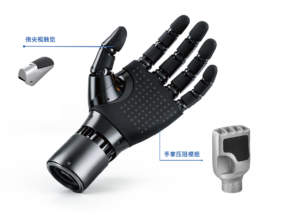
Four major product lines are rapidly taking shape, with industry-leading efficiency in R&D and product iteration
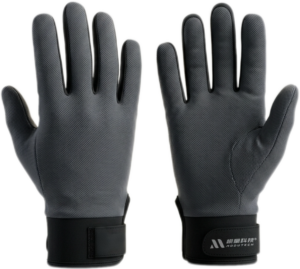
Modulus Technology has established four major product lines—visual and tactile sensors, haptic modules, haptic gloves, and haptic models—covering the entire supply chain from core components to end-to-end solutions.
The pace of new product development continues to accelerate.Recently, Modulus Technology officially launched its six-dimensional visual-tactile force sensor—marking another major breakthrough for the company in the field of visual-tactile fusion. The sensor enables simultaneous six-dimensional force perception, features over 150,000 effective sensing points, and achieves a sensitivity of 0.1 N. Additionally, the company has comprehensively upgraded its algorithm architecture, resulting in higher sensing accuracy, more comprehensive output data, and easier practical deployment. Within two months of the product’s launch, the company has received a large number of proactive inquiries and partnership requests. It has already begun delivering small-batch orders, successfully bridging the gap from R&D and launch to commercialization.
Forward-looking planning is being carried out in parallel.In the field of haptic gloves, Modulus Technology has long been active, simultaneously developing two major product lines: fabric haptic gloves and haptic and posture-sensing gloves. The former captures and quantifies pressure changes in real time when the palm comes into contact with an object, generating high-resolution pressure distribution maps of the hand, while the latter deeply integrates a haptic pressure sensor array with posture tracking, capturing everything from fingertip sensations to full-hand posture to provide comprehensive human-hand data for robotic dexterous manipulation, fully covering both data acquisition and teleoperation scenarios.
From core sensors to data acquisition devices and algorithmic models, ModuTech continues to accelerate the pace of product iteration, constantly pushing the boundaries of haptic perception technology and its applications.
Perception—Data—Model—Ontology—Scenario: Setting the Tactile Data Flywheel in Motion—The Future Looks Promising!
It is worth noting that,Modulus Technology has初步 established a unique “tactile data flywheel” effect and formed a complete technological closed loop comprising “perception—data—model—ontology—scenario.”..
The operational logic of this closed-loop system is as follows:
Perception Layer: Sensors collect high-dimensional tactile data (force, deformation, temperature, material properties, etc.) in real-world scenarios;
Data Layer: High-precision signal acquisition and real-time processing provide high-quality, task-aligned datasets for training robotic tactile models;
Model Layer: Data continuously feeds back into the training of algorithmic models, driving continuous improvements in recognition accuracy and generalization capabilities;
Ontology Layer: Training with high-quality data to drive model inference and build an industry-standardized knowledge system;
Scene Layer: Robots with enhanced capabilities are being deployed in more scenarios, driving the deployment of more sensors and generating more data.
This creates a virtuous cycle: “Sensor Applications → Data Accumulation → Model Evolution → Ontology Capability Upgrades → Scenario Expansion → Further Sensor Applications.” This data flywheel effect has enabled Module Technology to continuously strengthen its technological barriers as its business expands—the more customers and the more diverse the scenarios, the more data is generated, the more precise the algorithms become, and the stronger the product competitiveness grows, creating a “window of opportunity” advantage that is difficult for latecomers to catch up with.
This Round of Funding: Accelerating Mass Production and Ecosystem Expansion
Regarding this round of funding, Zhou Jianlin, co-founder of Modulus Technology, said:
“We are deeply grateful to our investors for their recognition and support of Modulus Technology. Tactile perception in robotics is a crucial piece of the puzzle for the widespread adoption of humanoid robots and smart manufacturing, and the industry is on the verge of explosive growth. We believe that competition in the tactile perception sector will ultimately come down to data. Whoever gets the data flywheel spinning first will be able to establish a lasting competitive advantage.””
Falcon Investment stated: “We are bullish on the potential of the haptic sensors and electronic skin sector, as well as the Modulus team’s ability to bring products to market. The company’s founding team consists of a combination of “senior executives from major tech firms and a professor specializing in flexible haptic sensors,” and the team has a track record of successfully commercializing products in the smart hardware and 3C manufacturing sectors. While there are numerous technical approaches in the haptic sensing industry, the company has accumulated expertise across several technical solutions. By tailoring solutions to meet the specific needs of clients in downstream applications, the company’s products have been adopted by key clients in application scenarios such as embodied intelligence, industrial inspection, and consumer electronics.”
Yihua Capital believes that: As an essential component for robots to perceive the world, tactile sensors are currently in a window of opportunity driven by the convergence of three growth factors: the mass production of end-effectors such as dexterous hands, the increasing penetration rate of tactile technology, and the expansion of its application scope. At the same time, they offer broad application scenarios in fields such as automotive, smart manufacturing, and consumer electronics. The Modulus Technology team possesses interdisciplinary expertise, offering full-stack capabilities that span from underlying materials to sensor design and back-end software algorithms. and possesses extensive experience in product engineering and mass production. The team has successfully secured adoption by leading clients and delivered bulk commercial orders in a short period, fully demonstrating downstream customers’ strong recognition of the team’s capabilities as well as the performance and consistency of its products.